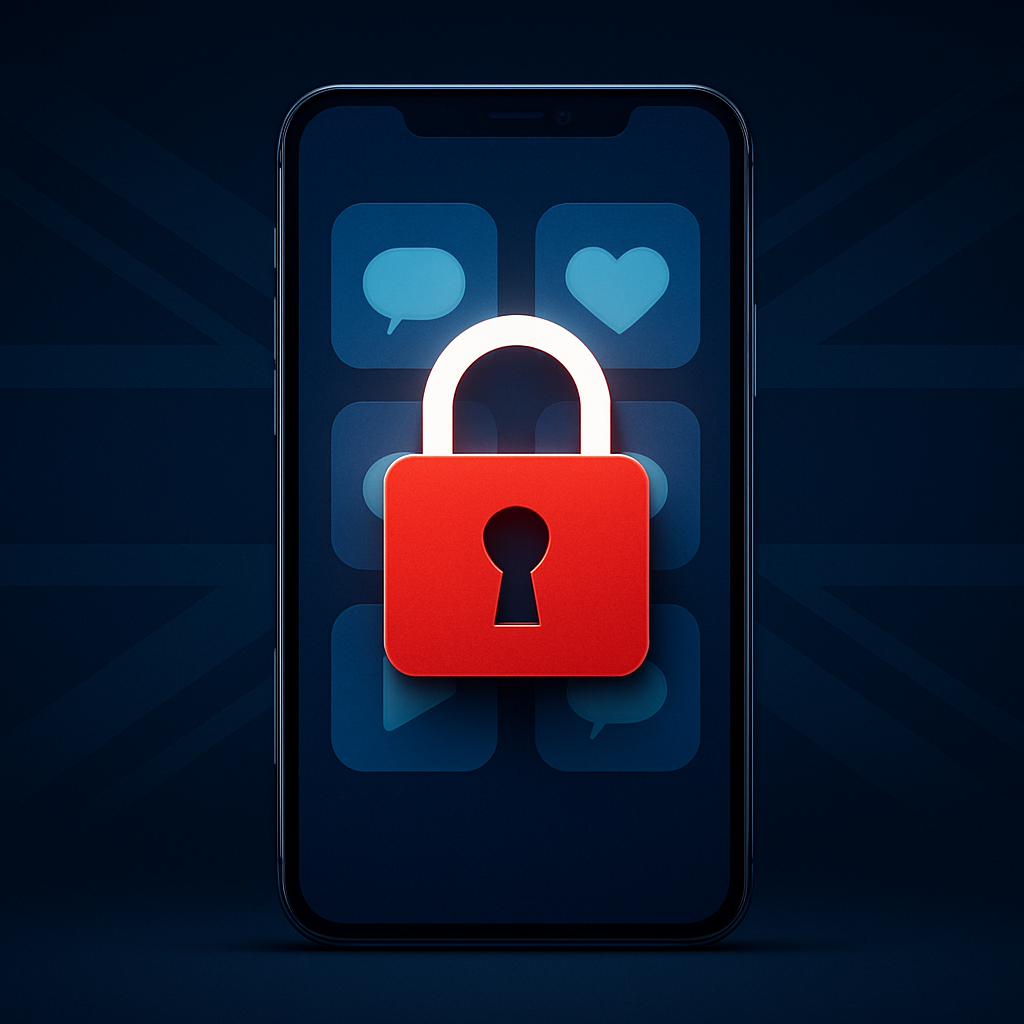
In a landmark announcement made on 15 June 2026, Prime Minister Keir Starmer confirmed one of the most sweeping online safety moves any government has ever made: a full ban on social media for children under the age of 16 in the United Kingdom.
The UK has officially announced the social media ban for under-16s, marking it as the world's most far-reaching online restrictions to date.
Whether you're a parent, an educator, a young person, or simply a concerned citizen, this development will reshape the digital landscape for an entire generation. Here's everything you need to know.
What Has the Government Actually Announced?
Following a national consultation, the UK is banning young people under 16 from social media platforms like TikTok and Instagram, Prime Minister Keir Starmer announced.
Speaking at a Downing Street press conference, Starmer drew a clear line in the sand, stating that
"tech giants had their chance and failed, but we're stepping in to protect children, back parents and set a new normal for future generations."
This is not a vague policy aspiration.
The UK said its ban will apply to platforms including Snapchat, TikTok, YouTube, Instagram, Facebook and X.
Crucially,
messaging apps like WhatsApp and Signal are exempted for now.
The scope of the restrictions extends beyond just age-gating social media accounts.
The plan includes not only a ban from major social media platforms, but also restrictions on gaming apps, as well as barring children under 16 from chatting with strangers, live streaming, or using romantic chatbots.
Additionally,
these protections would reportedly be enabled by default for both 16 and 17-year-olds as well, in an effort to avoid what the government describes as a "cliff-edge" at age 16.
And the government has signalled it is not done yet:
it would be looking in more detail at overnight social media curfews and breaks in infinite scrolling for under-18-year-olds, with more detail to be set out in July 2026.
The Road to the Ban: How Did We Get Here?
The announcement didn't come out of nowhere. It was the result of months of parliamentary debate, public consultation, and international observation.
The Children's Wellbeing and Schools Act received Royal Assent on 29 April 2026, and with it came a new power to introduce age-based or feature-based restrictions for children on social media platforms without needing to pass a new Act of Parliament.
Part 3 of the Children's Wellbeing and Schools Act 2026 will require the government to impose some form of age or functionality restrictions for children under 16. This was in response to successive government defeats in the House of Lords that would have meant a ban on social media use by the under-16s.
Before the final confirmation, the government ran the "Growing Up in the Online World" consultation.
The options on the table included a minimum age for social media, restrictions on specific addictive design features (infinite scroll, autoplay, algorithmic recommendations), overnight curfews, and raising the digital age of consent from 13. The consultation received over 45,000 responses, including nearly 6,000 from young people themselves.
The public feedback was unambiguous.
More than 83% of parents who responded said the risks of social media use outweigh the benefits, and 90% expressed support for a minimum age of 16 before children can access social media platforms.
Why Now? The Evidence Behind the Ban
Supporters of the ban point to a mounting body of evidence linking heavy social media use among children with real-world harms.
Statistics published in 2025 by Ofcom found that the age group that uses social media most frequently is 13 to 15 (95%), with 96% of this age group having their own social media profile — and that 37% of those aged 3 to 5 use social media, with 60% having their own social media profile.
These figures highlight just how deeply embedded social media is in the lives of very young children, well below any official minimum age.
In a Lords debate, Conservative life peer Baron John Nash, a former education minister, said the last few years had seen massive increases in children's contact with mental health services, eating disorders among 17-19 year olds, disruptive behaviour in schools, and sexual exploitation of children and teenagers.
Research from Imperial College London provides evidence that the link between social media use and depression and anxiety is largely driven by offsetting healthy behaviours — like getting enough sleep.
The UK was also heavily influenced by the experience of Australia.
The country's ministers visited Australia to study the effects of that nation's social media ban, which went into effect on December 10, 2025 — and only a month after it was enacted, Meta had shut down as many as 550,000 Australian accounts to comply with the law.
How Will the Ban Actually Be Enforced?
This is where things get technically complex — and where many experts acknowledge there are real challenges ahead.
The specifics of how the UK's social media ban will work is down to the country's communications regulator, Ofcom. The government says "Ofcom will conduct a rapid study on what is effective age assurance for verifying whether someone is over 16."
This means the UK social media ban will likely rely on technologies like digital ID and face scans — techniques that will no doubt kickstart another privacy debate.
Platforms that don't comply will face severe financial consequences.
Platforms that fail to take reasonable steps to exclude children younger than 16 could be punished with multimillion-dollar fines.
Under existing Online Safety Act enforcement powers,
Ofcom can issue fines of up to £18 million or 10% of global turnover, whichever is greater.
The government has been clear about learning from Australia's implementation challenges.
The government said they will "learn the lessons from Australia's experience" by introducing highly effective age assurance measures to support compliance, making it far harder for children to bypass safeguards.
Because the government wants to ensure the ban doesn't include educational services, e-commerce platforms or music streaming, there will be a narrowly defined list of exemptions to the definitions, which will be kept under review.
The Global Context: Britain Joins a Growing Movement
The UK is not acting in isolation.
The move, expected to take effect early next year, makes the UK part of a growing global movement to tighten online safety for children. Australia, Canada, Brazil and Indonesia have introduced legislation or announced age-based restrictions or requirements for children's access to social media. France, Spain, Denmark, Thailand and South Korea are among others studying or developing similar approaches.
Spain, Greece and Slovenia have also said they are working on bans after Australia became the first country in the world to block access to under-16s.
Within the UK's own political landscape, cross-party support has been building.
Restrictions on access and use of AI chatbots are also to be introduced. So-called AI "romantic companion" chatbots — designed to simulate sexual relationships or roleplay with users — will have to enforce a minimum age of 18.
Criticisms and Concerns: What Are the Counterarguments?
Not everyone is celebrating this announcement. Critics raise legitimate questions about both the effectiveness and the unintended consequences of a blanket ban.
Those who oppose a ban say it could force children into less regulated online spaces where they may be at greater risk.
Enforcement has historically been difficult, as children often find ways around age limits imposed by technology companies.
Some children's charities have warned about digital exclusion, and researchers note the evidence isn't entirely settled.
Although evidence has shown links between certain increases in social media use and poorer mental health, it is not clear whether increased use causes poorer mental health. It is possible poorer mental health drives an increase in use of social media. The evidence in this area is not conclusive or robust enough to define the relationship as causal.
There are also concerns about accountability.
Critics argue this lets social media companies off the hook, as they can divert resources away from making platforms safer, despite the fact that many young people will simply remain on them.
These are not trivial concerns, and they underscore the importance of accompanying measures — digital literacy education, parental support, and robust enforcement — running alongside any legislative ban.
Practical Tips: What Parents and Families Should Do Right Now
The ban won't come into force until 2027, but that doesn't mean you should wait. Here's what you can act on today:
- Audit your child's accounts.
Check your child's date of birth on every platform they use. Ofcom's own data shows that the age-based protections platforms offer — Teen Account settings on Instagram, Family Pairing on TikTok, restricted mode on YouTube — are only applied when the platform knows a user is a child. If your child signed up with a false birthday to get around the age limit, the protections are not active on their account.
- Enable parental controls now.
Use parental controls on devices and apps to limit access to inappropriate content.
Most devices — iOS and Android alike — offer built-in screen time and content controls that take minutes to activate.
- Start the conversation, not just the restrictions. According to YoungMinds,
the most important thing you can offer your child is a sense of safety and openness. If your child feels judged or monitored too closely, they might shut down and hide things. If they feel trusted, they're more likely to open up.
- Use trusted support resources.
If your child encounters something worrying online, trusted resources include the NSPCC Helpline for guidance and support, Childline's Online Safety Hub for advice on staying safe, and the Report Remove Tool if a child has shared a sexual image online.
- Check Ofcom's parent guidance.
Ofcom has published information and advice that explains to parents what their safety measures mean in practice, including tips on keeping children safe online — available at ofcom.org.uk/parents.
- Monitor what's coming. The government has confirmed it will set out further detail — including on overnight curfews and infinite scroll restrictions for under-18s — in July 2026. Stay informed so you can adapt your family's digital boundaries accordingly.
Conclusion: A Landmark Moment — But Not the Final Word
The UK's under-16 social media ban represents a genuine turning point in how governments think about children's rights and digital safety. It is the culmination of years of advocacy, parliamentary pressure, and parental concern — and it signals that the era of unchecked platform access for children is coming to an end.
As Starmer himself put it: "Social media is making our children unhappy and unsafe, and as a parent, as much as a Prime Minister, I just can't let that go on anymore."
Whether you agree with the approach or have reservations, one thing is certain: the digital world your child navigates is about to change significantly.
What do you think about the UK's social media ban for under-16s? Share this article with other parents, carers, and educators in your network — because the more informed our communities are, the better placed we'll all be to support young people through this transition. And if you want to stay up to date on all the latest developments in children's online safety, subscribe to our newsletter for weekly insights delivered straight to your inbox.