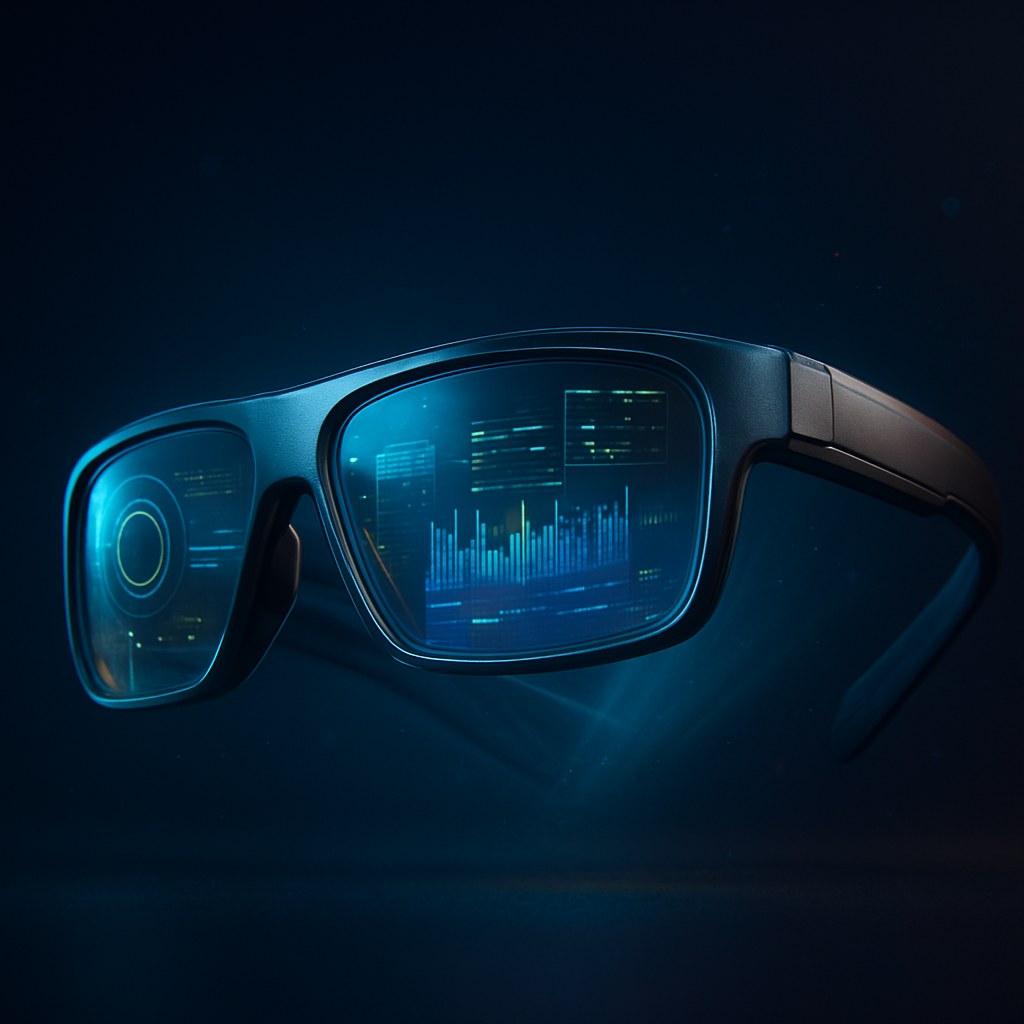
The future of computing isn't in your pocket — it's on your face. On June 16, 2026, Snap made good on one of the most anticipated promises in consumer tech by officially unveiling Specs, its first commercially available augmented reality glasses. Announced at the Augmented World Expo (AWE) 2026,
Snap opened preorders for Specs — fully standalone true AR glasses shipping this fall in the US, UK, and France for $2,195 — beating giants like Meta, Apple, and Google to the punch.
This isn't just another piece of wearable tech.
It's the result of around a decade of work on smart glasses at Snap and its billions of dollars in investment into augmented reality research.
So, what exactly does $2,195 buy you? And is there a real enterprise case for strapping a spatial computer to your face? Let's dig in.
What Are Snap Specs? A Quick Primer
Snap Specs represent a meaningful step-change from the developer-focused Spectacles kits that came before them.
Compared to the bulky Spectacles standalone AR development kit glasses, which the company rented to developers for $99/month, Snap CEO Evan Spiegel claimed the consumer Specs will have "a much smaller form factor, at a fraction of the weight, with a ton more capability."
By "true AR glasses," we mean glasses you could wear in daily life that can place virtual objects and interfaces into the real world — a major capability jump compared to HUD glasses like Meta Ray-Ban Display, which just add a small fixed display to your view.
As Spiegel himself put it: "Specs really represents a way to use computing together in shared experiences in the real world, looking up through see-through lenses rather than at an opaque screen."
Hardware Specs: What You're Actually Getting
Display & Optics
At the heart of Specs is a genuinely impressive display system.
The AR glasses feature Snap's proprietary liquid crystal on silicon (LCoS) display technology, offering a 51-degree field-of-view (FOV) and 16 million colors — a 30% larger display area than the fifth-gen Spectacles.
Snap compares the display to a 24-inch monitor when working and a virtual screen of about 115 inches at a distance of three meters for media consumption.
That's a meaningful visual workspace for hands-free productivity.
The electrochromic lenses are designed to automatically adapt to lighting conditions and switch from fully tinted to transparent within ten seconds
— a particularly useful feature for moving between indoor and outdoor environments.
Build, Weight & Comfort
Built from Swiss TR90 polymer, Specs come in two sizes, weighing 132 grams and 136 grams respectively — making them essentially 40% lighter than the fifth-gen version.
Prescription inserts are also supported, and will include multiple nose pads for better individual fit.
Processing Power
Specs don't require an external compute puck or tethered connection to external devices, as the glasses pack in two Qualcomm Snapdragon processors — one dedicated to computer vision and another for running AR experiences.
That dual-chip architecture is what makes true spatial computing possible without a cable dangling to your phone.
Battery Life
Snap states battery life to be up to four hours with mixed usage. The included charging case can fully charge the glasses up to four times, bringing total runtime on the go to 20 hours.
That's a workday's worth of use if you manage your sessions sensibly.
Pricing Breakdown: What Does $2,195 Actually Mean?
Let's be honest — $2,195 is serious money.
At $2,195 with a $200 refundable deposit, Specs are more than 15 times the price of Snap's $130 camera-only Spectacles that debuted in 2016.
To contextualise the price point in the broader market:
- Meta Ray-Ban (display model): ~$800 — but
vastly less capable, showing only a small fixed heads-up display in one eye, while Snap is targeting a relatively wide field of view binocular display system with head tracking, hand tracking, and real-time environment meshing.
- Apple Vision Pro: $3,499 — a powerful but isolating headset, not everyday eyewear.
Pre-orders are open immediately at $2,195 with a $200 refundable deposit, with units slated to ship this fall across the US, the UK, and France.
For early adopters and enterprise buyers, that refundable deposit lowers the risk of committing to an entirely new computing paradigm.
Enterprise Use Cases: Where Snap Specs Could Shine
While Snap has positioned Specs as a consumer product, the enterprise applications are arguably where the $2,195 price tag makes the most intuitive sense. Here's where the real opportunity lies:
1. Field Service & Remote Assistance
Hands-free access to schematics, manuals, and real-time expert guidance is the holy grail for field technicians. With Snap Specs' binocular display and contextual AI, engineers can overlay repair instructions directly onto the machinery they're working on — no tablet, no fumbling with a phone.
2. Navigation & Wayfinding
Snap launched new tools for developers building location-based experiences, including the Fleet Management app, Guided Mode, and Guided Navigation
— precisely the kind of infrastructure that enables logistics, warehousing, and last-mile delivery workers to navigate complex environments hands-free.
3. Training & Education
Developers have already created hundreds of experiences for Specs, ranging from golf guidance and educational applications to immersive historical experiences.
The same principle applies to corporate training: onboarding new staff with spatial, step-by-step AR walkthroughs rather than printed manuals.
4. Productivity & Virtual Workspaces
The glasses allow you to surf the internet, connect to productivity apps, and check your email
— all without reaching for a screen. For workers who need their hands free but their information close, that's a genuine workflow upgrade.
5. Shared Spatial Experiences
There are games — including ones that support shared multiplayer sessions between two users. Snap calls this feature "EyeConnect," activated simply by two wearers making eye contact.
In enterprise terms, this opens the door to co-located AR collaboration, design reviews, and shared virtual prototyping.
6. AI-Powered Contextual Assistance
Developers will also be able to create AI agent-like experiences for the device using a preview feature that integrates with Anthropic's Claude Code, OpenAI's Codex, and Cursor's coding tools.
Think real-time language translation, object recognition, and AI-driven decision support for frontline workers.
The Software Ecosystem: Snap OS and Lenses
Hardware is only as good as the software running on it, and Snap has a meaningful head start here.
Since releasing Snap OS in the latest Spectacles kit in late 2024, Snap has repeatedly added new capabilities for developers building Lenses, and launched Snap OS 2.0 adding and improving first-party apps like Browser, Gallery, and Spotlight.
Over the past year and a half, Snap has shipped 10 Snap OS updates with more than 40 new features and APIs, and developers have already published hundreds of Lenses for Specs.
The AI integrations are especially noteworthy.
Snap OS features deep integrations with OpenAI and Google's Gemini, a depth-module API for 3D spatial anchoring, and automated speech recognition in over 40 languages.
For global enterprise deployments, multilingual voice control alone is a significant unlock.
Privacy is also addressed directly.
Snap has emphasised privacy features including on-device processing, permission prompts for sensitive information, and an LED indicator when recording is active.
Practical Tips: How to Approach the Snap Specs Decision
Whether you're an enterprise IT buyer, a developer, or an eager early adopter, here are actionable steps to take right now:
- Place your preorder with the $200 refundable deposit to secure your place in the fall shipping queue without fully committing.
- Evaluate your specific use case first. Specs shine brightest in environments where hands-free, spatially anchored information is genuinely valuable — not just "cool."
- Explore the Lens Studio developer ecosystem. If you're building enterprise applications, start experimenting with Snap OS and Lens Studio now —
Snap introduced agentic development for building Specs Lenses in Lens Studio, designed to help developers explore ideas, prototype, test, debug, and optimise.
- Consider a pilot deployment for a specific team or workflow rather than a company-wide rollout. Measure productivity impact before scaling.
- Check prescription lens availability.
Snap has announced prescription lenses, to be manufactured to order by contract partners and easily replaceable.
Details on pricing are still forthcoming — watch this space.
- Plan for the charging case. With four hours of mixed-use battery and
up to 20 hours total with the bundled portable charging case
, build a charging rhythm into your team's workflow from day one.
Conclusion: A Genuine Milestone — With Caveats
Snap Specs aren't perfect. The price is steep, some key technical specs remain undisclosed, and the form factor — while dramatically improved — is still recognisably "tech glasses." But make no mistake:
Snap CEO Evan Spiegel has opened preorders at this year's AWE, making good on the company's promise and beating giants like Meta, Apple, and Google to the punch.
For enterprises with legitimate hands-free computing needs, $2,195 is a rational investment in a category that is only going to grow. The AI integrations, binocular display, dual-chip architecture, and a maturing software ecosystem combine to make Snap Specs the most credible shot at mainstream AR glasses we've seen yet.
Ready to explore what Snap Specs could do for your workflow or business? Head to Specs.com to place your preorder today, and start experimenting with Lens Studio to get ahead of the curve — because spatial computing's early movers will define the use cases everyone else follows.