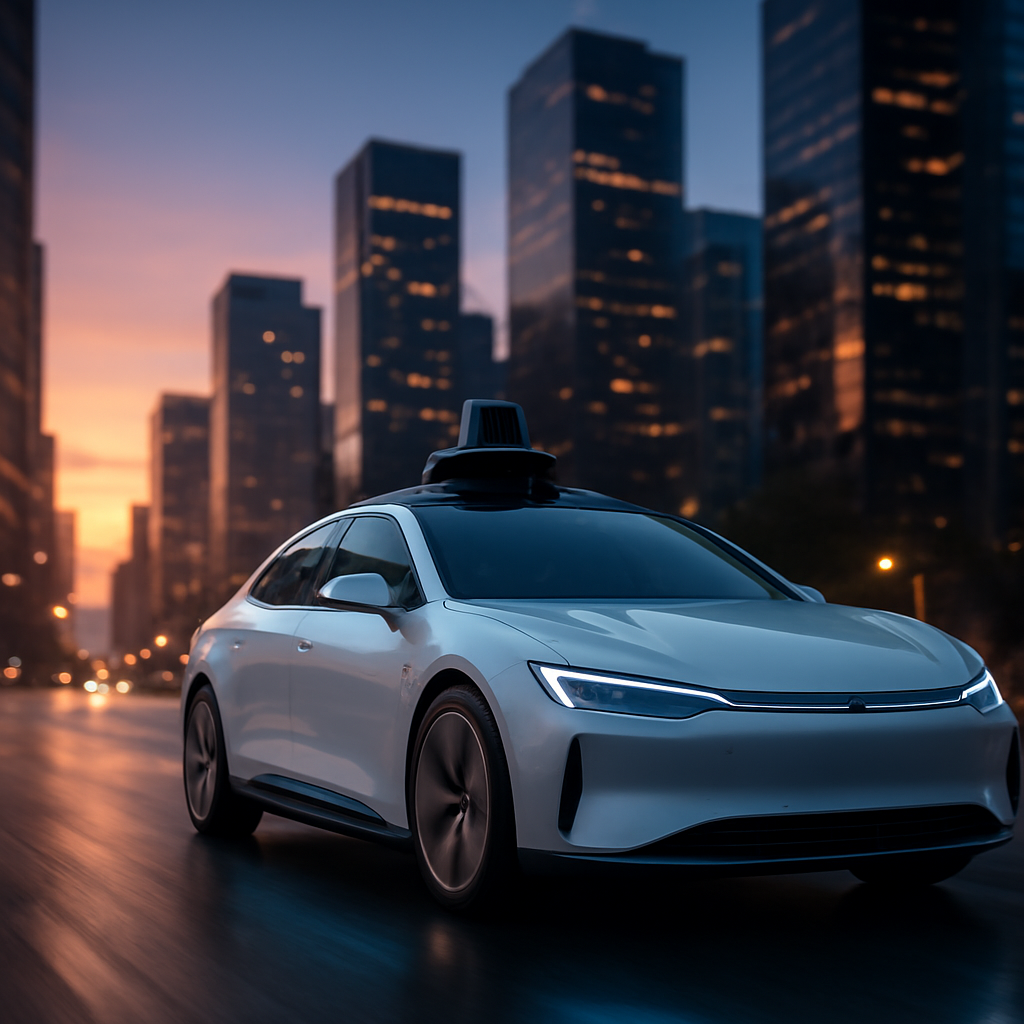
The autonomous vehicle industry just experienced one of its most significant strategic pivots in years.
Mobileye Global announced on June 16, 2026, that it will launch its own robotaxi service in the United States, marking a significant move into direct competition with established players in the self-driving technology market.
For enterprise mobility leaders, fleet managers, and AV investors, this is not just another headline — it's a signal that the competitive landscape for autonomous ride-hailing is rapidly maturing, and the time to understand its implications is now.
From Technology Supplier to Robotaxi Operator: A Strategic Pivot
For over two decades, Mobileye has been content to operate in the background — supplying the brains behind autonomous driving to automakers around the world.
Through 2025, more than 230 million vehicles worldwide have been built with Mobileye's EyeQ technology inside.
That track record is extraordinary. But something has changed.
The move marks a shift for the company, which has so far supplied its Mobileye Drive self-driving system to automakers and mobility operators rather than operating services itself. Mobileye will now combine Mobileye Drive with fleet operations, rider services, and mobility management into a single vertically integrated business, while continuing to support its existing customer deployments.
The trigger appears to be a combination of partner delays and opportunity.
A joint venture with Lyft and Japanese conglomerate Marubeni was initially expected to launch in Dallas in 2026, but this has not yet happened, and it appears Mobileye is no longer relying on this venture.
CEO Amnon Shashua has chosen to take matters into his own hands rather than wait for collaborative timelines to accelerate.
"Operating our own service allows us to accelerate adoption, gain direct operational experience, and showcase the full potential of autonomous mobility," Mobileye CEO Amnon Shashua said.
The Plan: 100 Vehicles, One City, a Five-Year Scaling Roadmap
The rollout strategy is measured but ambitious.
Mobileye is planning to prepare an initial fleet of about 100 vehicles targeted for deployment in a major metropolitan U.S. market beginning in 2027. The deployment is planned to be phased throughout the year and is intended to validate the operational model under fully driverless conditions.
Critically, the ambition extends far beyond that initial pilot.
Following successful operation of the initial fleet, Mobileye plans to scale the business substantially, targeting approximately 17,000 vehicles over the following five years.
The company will blend its proprietary Mobileye Drive autonomous system with digital mapping, routing, and passenger-facing infrastructure of its Moovit subsidiary. Instead of manufacturing its own cars, Mobileye will partner with external vehicle platforms and fleet managers, allowing it to scale up without absorbing all the overhead of heavy manufacturing.
The Moovit integration is a key differentiator.
Moovit's mobility platform serves more than 1.7 billion users across more than 3,500 cities in 112 countries and 45 languages. Moovit's expertise in consumer mobility, multimodal trip planning, rider engagement and fleet operations provides a critical foundation for scaling autonomous mobility services globally.
Entering a Crowded Arena: The Competitive Landscape
Make no mistake — Mobileye is not entering an empty market.
The move will put Mobileye in direct competition with Alphabet's Waymo, Amazon's Zoox, and Tesla's self-driving vehicles, as they jostle to emerge as leaders in a market with huge potential.
Waymo, considered the largest player in the US robotaxi market, leads it decisively but operates only about 4,000 vehicles across 10 cities in the United States — roughly 400 autonomous taxis per city.
Meanwhile,
Tesla started a limited robotaxi service in Austin in 2025, and Lyft is getting ready to launch robotaxis in Atlanta with May Mobility.
Robotaxi businesses are not only about autonomous driving performance. They also depend on dispatch, routing, customer experience, vehicle utilisation, and operations management. Mobileye's strategy suggests it wants to control those layers as well, not just the self-driving brain.
This is a crucial insight. Vertical integration — owning the full stack from sensor fusion to rider app — is increasingly seen as the only durable path to profitability in autonomous mobility.
Vertical integration allows Mobileye to capture a larger share of the mobility value chain and generate recurring service revenue.
What This Means for Enterprise Mobility Strategy
Mobileye's move has ripple effects far beyond San Francisco or Phoenix. For enterprise mobility managers, corporate travel buyers, and logistics operators, this shift reshapes how you should be thinking about your fleet and transportation planning over the next three to five years.
The global autonomous-vehicle market is projected to reach $214 billion by 2030, driven largely by commercial fleets.
Mobileye's entry adds a well-capitalised, deeply experienced competitor to a space that has so far been dominated by a handful of vertically integrated players. More competition means faster innovation, more negotiating leverage for enterprise buyers, and ultimately lower costs.
The separation of leaders from laggards will be determined by the ability to integrate AI as an operational partner and transform high-quality data into competitive advantage.
Enterprises that build AV-ready mobility policies today — vendor agnosticism, flexible contracts, safety and compliance frameworks — will be far better positioned to capitalise as these services scale.
Mobileye is not ruling out cooperation with Uber and Lyft, which lead the U.S. ride-hailing market,
meaning enterprise accounts may soon be able to access Mobileye-powered driverless rides through platforms they already use. The integration path for corporate travel programs could be smoother than expected.
Existing Partnerships Remain Intact — For Now
One legitimate concern for automakers, fleet operators, and mobility providers already using Mobileye Drive is whether this new competitive posture threatens their technology supply. Mobileye has been emphatic on this point.
The initiative does not alter Mobileye's commitment to supplying Mobileye Drive to automakers, mobility operators, and other customers. Rather, Mobileye views direct robotaxi operations as a complementary path to market that can accelerate deployment, generate operational learnings, and further demonstrate the capabilities of the Mobileye Drive platform at scale.
The Volkswagen partnership, for example, remains a cornerstone of the broader strategy.
Volkswagen Autonomous Mobility outlined an expansion of its robotaxi roadmap at CES 2026, targeting commercial robotaxi services across six cities by the end of 2027 and a fleet of more than 100,000 self-driving vehicles by the end of 2033. This expansion is supported by Mobileye's continued advancement toward safety driver removal and commercialisation beginning in 2026.
The key question going forward is whether that supplier-operator duality can hold as competition intensifies. Regulators, partners, and investors will all be watching closely.
Practical Tips: How to Prepare Your Organisation for the Autonomous Mobility Shift
Whether you're a fleet manager, corporate travel director, or business strategy leader, here's how to act on this shift today:
-
Audit your current mobility contracts. Review flexibility clauses in ride-hailing and fleet agreements. As new autonomous operators like Mobileye enter the market, you'll want the freedom to pilot new services without punitive lock-in fees.
-
Build an AV-readiness checklist. Define what "AV-compatible" means for your operations — from safety standards and data privacy to insurance liability and employee acceptance policies.
-
Monitor regulatory developments by city.
In the US, federal safety standards set the floor but states regulate operations. What Waymo can do in Phoenix under Arizona law isn't automatically replicable in New York.
Track where Mobileye's unnamed launch city is likely to be, as it signals where regulatory momentum is strongest.
-
Leverage Moovit integration points. If your organisation already uses Moovit for public transit planning or employee commuter benefits, explore how Mobileye's robotaxi layer could extend those capabilities when the service launches.
-
Invest in AI-powered fleet management now.
89% of enterprise fleets are now using AI-powered tools
— if yours isn't, you're already behind. The data and operational foundations built today will make autonomous fleet integration far smoother tomorrow.
- Stay informed on Capital Markets Day.
Mobileye plans to share additional commercial and operational details at a Capital Markets Day in the US before the end of 2026.
This event will be critical for understanding pricing, city selection, and enterprise partnership opportunities.
Conclusion: The Autonomous Race Is Accelerating — Don't Get Left Behind
Mobileye's decision to launch a vertically integrated US robotaxi service is a watershed moment for the autonomous vehicle industry. It signals that the era of pure technology supply is giving way to full-stack operational ownership — and that enterprises which understand this shift now will be far better positioned to navigate it strategically.
"The robotaxi revolution has only just begun, and its potential for transforming how we travel around the world continues to increase," said Prof. Amnon Shashua. "As interest in autonomous mobility accelerates, the industry has become increasingly dependent on a small number of technology providers and business models."
Mobileye is betting it can be the disruptive alternative — and based on its 25-year track record, that's a bet worth watching closely.
Is your organisation ready for the autonomous mobility era? Subscribe to our newsletter for the latest AV industry analysis, enterprise mobility strategy guides, and actionable fleet management insights delivered straight to your inbox every week. Don't let this transformation happen to your business — make it work for you.