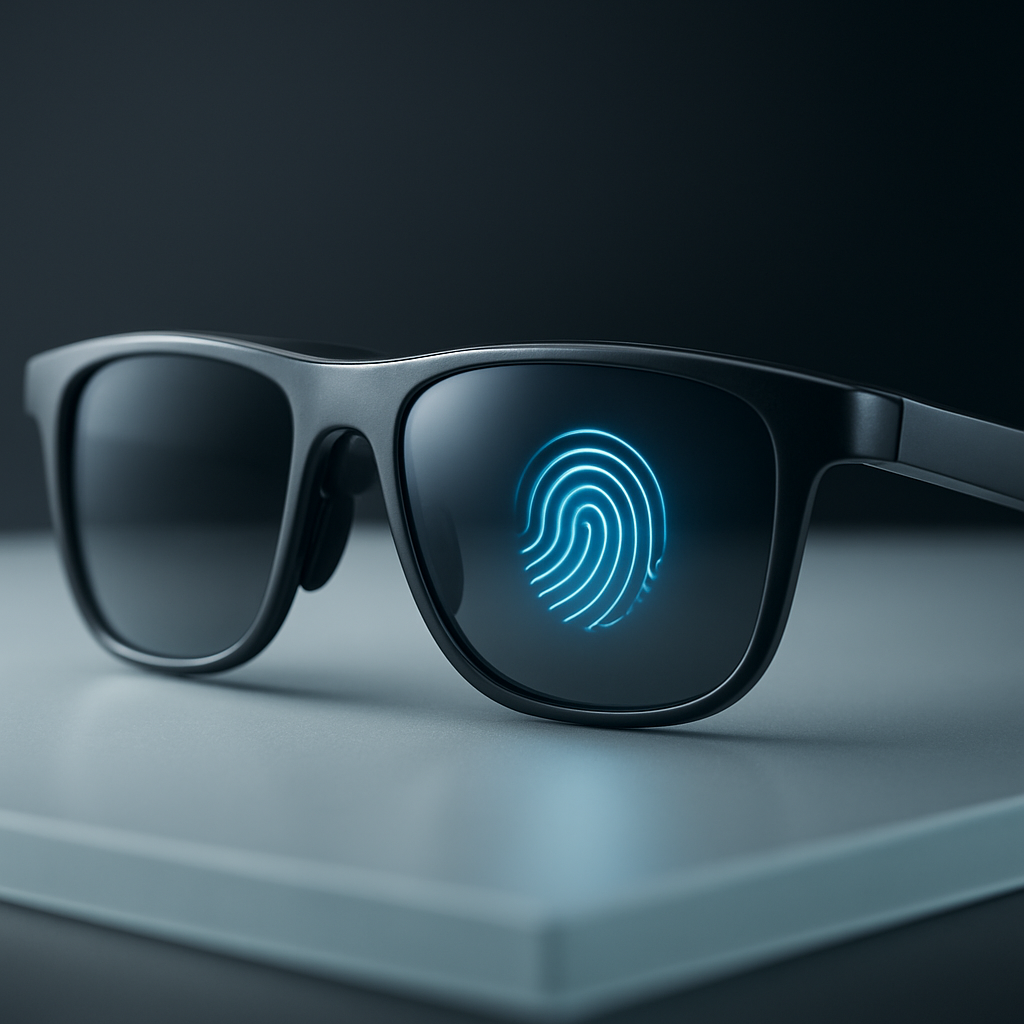
The smart glasses race is heating up — and Apple isn't just planning to enter the market. It's planning to redefine it. While competitors have flooded stores with camera-equipped wearables, Apple is deliberately taking its time, sharpening a strategy that puts user privacy at the very centre of its product pitch. In a category already plagued by controversy, scandal, and outright bans, that calculated patience could be Apple's most powerful move yet.
The Smart Glasses Market Has a Serious Trust Problem
To understand Apple's opportunity, you first need to understand the mess it's stepping into.
About 7 million pairs of Meta's Ray-Ban smart glasses were sold in 2025
, making them one of the rare AI hardware products to find genuine consumer traction. But the sales success has come at a cost.
Meta's hardware design intended to address privacy concerns has come under serious scrutiny — the glasses' tiny white recording LED is nearly invisible in daylight, and in April 2025, Meta updated its privacy policy, enabling AI features by default and removing the option for users to prevent voice recordings from being stored.
The problems run deeper still.
Two Harvard students turned a pair of the glasses into a real-time facial recognition tool, using artificial intelligence to scan for faces in the wearer's field of vision and instantly retrieve biographical information about the person.
Then came
reports from February 2026 suggesting Meta plans to integrate facial recognition features into its smart glasses — a move that would allow wearers to identify strangers in real-time by cross-referencing social media databases, effectively ending public anonymity.
The fallout has been swift.
Courtrooms in New York and parts of Pennsylvania and Wisconsin have banned smart glasses outright. Royal Caribbean has prohibited them in casinos, restrooms, and children's areas. Schools, gyms, hospitals, and entertainment venues have followed with their own restrictions.
Apple's upcoming smart glasses have a major challenge in front of them: overcoming the privacy baggage for a category that Meta created.
And that's precisely where Apple sees its opening.
Apple's Privacy-First Blueprint for Smart Glasses
Apple currently plans to unveil its first smart glasses at WWDC 2027 next June, and privacy will be a focus, according to Bloomberg's Mark Gurman.
For the glasses, Apple is prototyping "a slew of new hardware and software-related privacy features" that are not available on current products.
What might those features look like? The picture emerging from multiple credible reports is striking in its ambition:
- No facial recognition.
Apple is expected to favor on-device processing, avoid facial recognition entirely, and steer clear of anything resembling Meta's proposed "super-sensing" mode, which continuously analyzes a wearer's surroundings.
- No training on your footage.
Apple also is not expected to use customer recordings to train AI models, or to employ contractors to review footage captured by the glasses — a practice that drew serious criticism when a similar approach surfaced with Siri.
- Possible camera-free prototypes.
In a world where some people are wary of being secretly recorded by camera-equipped glasses, Apple has considered releasing smart glasses with cameras that assist with AI features but lack photo and video recording capabilities. Apple has even prototyped smart glasses without a camera system entirely.
- Visible recording indicators.
Apple's glasses will incorporate features already found in Meta's products, such as the recording LED and the ability to prevent the camera from being used if the LED is covered or obscured.
Expect Apple to go significantly further with these safeguards.
The company is using the extra time in its development timeline to refine both the glasses' features and the messaging around privacy.
On-Device AI: Apple's Technical Moat
Privacy in Apple's smart glasses won't be a marketing veneer — it's baked into the underlying architecture of how the company builds AI.
For years, Apple has built its identity around privacy, on-device processing, secure hardware, and tightly controlled software integration. It pioneered this approach decades before the AI boom, laying a foundation that now matters more than ever.
The core components of Apple Intelligence include on-device model inference and Private Cloud Compute — for tasks that require more processing power while still preserving privacy.
A key feature Apple is expected to tout is on-device processing: by keeping all data on a user's device, that user can be confident their information isn't being used to target ads or sell them something.
For smart glasses, this matters enormously.
Glasses with cameras are not only a display product — they are an imagery product. They see what the user sees. They may capture streets, homes, children, documents, screens, faces, license plates, offices, classrooms, stores, and private routines.
Processing that data on-device rather than routing it through distant servers is not a minor technical detail. It's the difference between a device that respects you and one that surveils you.
Apple's differentiation is privacy and integration — not raw model capability.
That framing is key. Apple isn't pretending to have the most powerful AI in the room. It's betting that most consumers would rather have AI that protects them than AI that merely impresses them.
The Ecosystem Advantage: More Than Just Glasses
Apple's privacy play doesn't exist in isolation. It's amplified by the company's unmatched hardware and software ecosystem.
Apple's entry into smart glasses is likely to be more tightly integrated with the iPhone ecosystem than any competitor, which could become its biggest competitive advantage. The glasses are expected to work closely with the iPhone for processing, connectivity, and user identity, allowing Apple to preserve battery life and keep the hardware slim.
The rumoured smart glasses will leverage deep integration with iPhones and AirPods, creating an experience that extends naturally from existing Apple devices. Think notifications from your iPhone, music control through your AirPods, and health data syncing with your Apple Watch — all without missing a beat.
In effect, Apple is trying to give Siri "eyes and ears," extending Apple Intelligence beyond the iPhone and Mac into always-on wearable computing. Rather than forcing users to open an app or take out a phone, the glasses would allow AI interactions to happen in real time and in context.
This ecosystem depth is something no rival can easily replicate overnight. Meta makes great glasses, but it doesn't make your phone, your laptop, your watch, or your earbuds.
Why Privacy Is a Genuine Business Strategy — Not Just PR
Some dismiss Apple's privacy positioning as clever marketing. The business logic, however, is hard to argue with.
In a period when much of the technology industry is racing to make AI bigger, more connected, and more dependent on centralized data, Apple's position looks different. It is trying to make AI personal without making personal data the price of entry.
Apple's engineering and marketing teams have been working in parallel to refine both the product and the company's privacy message before putting cameras on people's faces and selling them at scale. That dual focus reflects something the spec sheet cannot resolve: entering this category carries reputational risk that hardware quality alone cannot offset.
Regulators are also making privacy a commercial imperative, not an optional extra.
Privacy concerns are particularly strong in the European Union, where stricter regulations have slowed adoption of some AI features. AI-enabled wearables are regulated by the EU's AI Act and the General Data Protection Regulation (GDPR).
Apple's privacy architecture positions it to navigate these regulations far more smoothly than competitors who built their business models around data collection.
Practical Tips: What This Means for You as a Consumer
Whether you're a devoted Apple user or simply privacy-conscious, here's how to stay informed and make smart choices in the evolving smart glasses landscape:
- Research data policies before buying any smart glasses. Check whether the manufacturer uses your footage to train AI models and whether contractors have access to your recordings.
- Look for on-device processing. Devices that process AI requests locally rather than in the cloud are inherently more private. Ask explicitly whether this is how a product works.
- Pay attention to the recording indicator. The LED light on camera-equipped glasses should be clearly visible to bystanders, not just a legal checkbox. If it's hard to see, it's not genuinely doing its job.
- Check venue restrictions before wearing smart glasses in public. With bans spreading across courts, cruise ships, schools, and hospitals, knowing local rules saves embarrassment and legal trouble.
- Follow Apple's WWDC 2027 announcements closely.
Apple's marketing will likely emphasise the privacy measures of its glasses compared to rival products like the Meta Ray-Bans
— meaning the announcement will set a new benchmark for the entire industry.
- Don't rush to buy first-generation AI glasses from any brand. The privacy frameworks for this category are still forming. Waiting for mature products with tested safeguards is a legitimate and sensible option.
Conclusion: Privacy Is the New Premium Feature
The smart glasses category has arrived with enormous promise and significant baggage. Meta proved there's a market. Apple is now betting that a better, more trustworthy version of that market is even bigger.
If Apple waits too long, Meta and others could define the social norms around AI eyewear before Apple enters. Apple's advantage is trust, hardware integration, and ecosystem depth.
Get the timing right, though, and Apple could do to smart glasses what it did to smartphones: not invent the category, but make people wonder how they ever trusted the version that came before.
In an era where your glasses can literally see everything you see, privacy isn't a footnote — it's the entire product. Apple understands that. The question is whether the rest of the industry — and consumers — will catch up in time.
Stay ahead of the smart glasses revolution. Subscribe to our newsletter for the latest updates on Apple's wearable strategy, privacy tech developments, and AI news that actually matters to you. Share this post with anyone weighing up their next wearable purchase — it could save them more than just money.