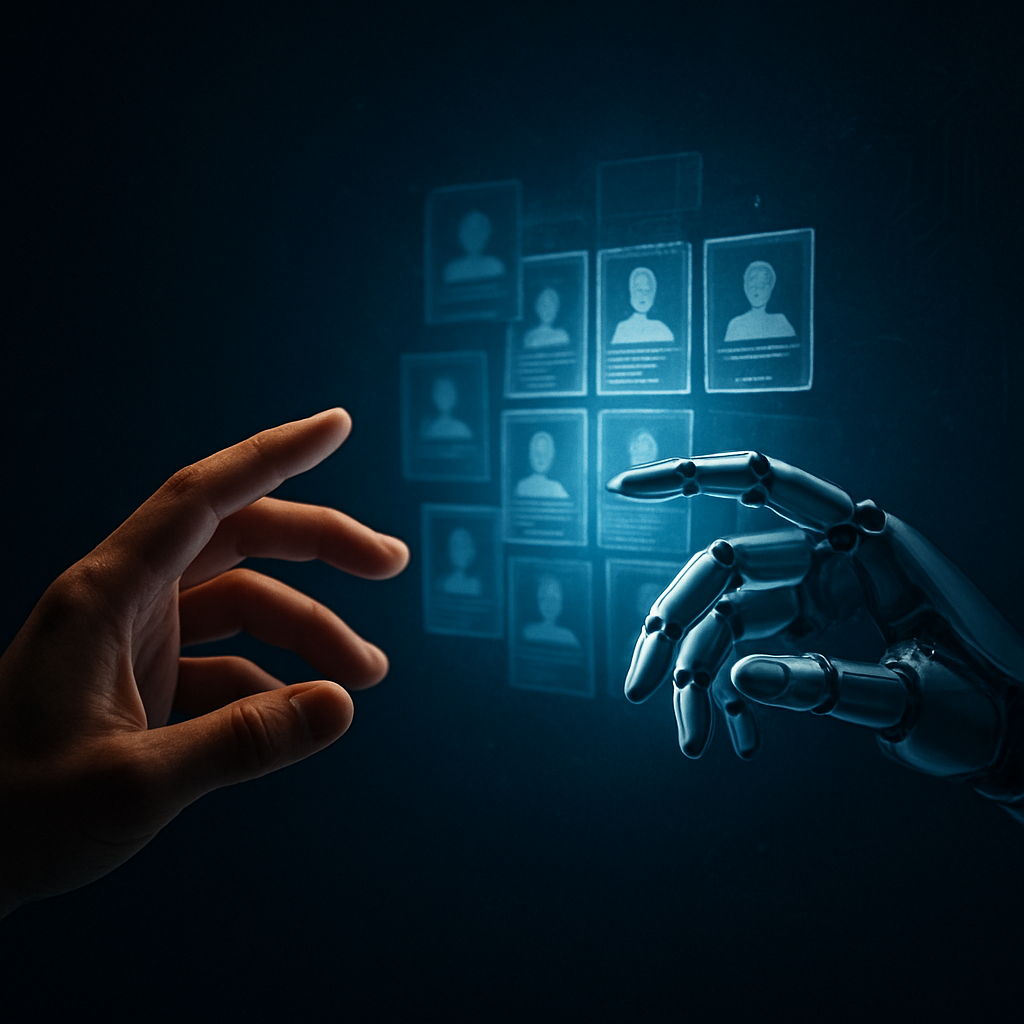
The promise of AI in recruitment was seductive: remove human subjectivity, eliminate gut-feel decisions, and surface the best talent purely on merit. It sounded like the end of the old-boys' network — a technological equaliser built for a fairer world.
The reality is far more complicated. Mounting evidence from researchers, regulators, and the courtroom reveals that AI hiring tools don't eliminate bias. In many cases, they amplify it — at industrial scale, at machine speed, and almost entirely without the candidate's knowledge.
If you're a job seeker, an HR professional, or an employer relying on automated recruitment, what you don't know about algorithmic bias could be costing you dearly.
The Scale of AI in Hiring — And Why It Matters
AI-powered recruitment is no longer an experimental fringe.
99% of Fortune 500 companies now use some form of AI in their hiring process.
The World Economic Forum reported in 2025 that approximately 88% of companies are already utilising some form of artificial intelligence in candidate screening.
The volume is staggering.
In 2024 alone, AI-powered hiring tools processed over 30 million applications while triggering hundreds of discrimination complaints.
Yet most candidates have no idea this is happening to them.
A 2024 Gallup survey found that 93% of Fortune 500 Chief Human Resource Officers are integrating AI into business practices — yet only about one third of employees knew that their employer uses AI tools in hiring or management.
That asymmetry — where employers know and candidates don't — is itself a problem. But the deeper issue is what these tools are actually doing under the hood.
How AI Bias Is Born: The Training Data Problem
To understand why AI discriminates, you have to understand how it learns.
AI algorithms rely on historical data to make predictions and decisions. If the data used to train these systems reflects biased human decisions — favouring a particular gender, race, or age group — the algorithm will perpetuate those biases.
This is the original sin of automated recruitment: the machines learn from us. And historically, "us" has not been a particularly unbiased hiring force.
A 2022 study found that 61% of AI recruitment tools trained on biased data replicated discriminatory hiring patterns.
An algorithm trained to identify high-performing employees based on past successes may inadvertently favour traits that are more common in one demographic group — as seen in systems that favoured male candidates with specific educational backgrounds, sidelining equally capable women and minorities.
A 2025 open-access study in Computers in Human Behavior: Artificial Humans reinforces this concern, finding that AI systems can perpetuate gender bias through biased training datasets, algorithmic design choices, and human feedback loops.
The insidious part?
Despite claims of neutrality, AI tools can discriminate by reproducing and amplifying human bias. If the data used to train the algorithm reflects biased hiring patterns — such as favouring certain genders, races, ages, or schools — AI tools will replicate those biases. This can result in qualified candidates being filtered out simply because they don't match a profile the algorithm has learned to prefer.
Who Gets Hurt: Race, Gender, Age, and Disability
The discrimination AI hiring tools produce is not random. It follows deeply familiar patterns — while introducing some troubling new wrinkles.
Racial Bias
A 2024 study by Kyra Wilson and Aylin Caliskan revealed that Massive Text Embedding (MTE) models used by many resume screening tools were biased. The MTE models significantly favoured white-associated names in 85.1% of cases; further analysis also determined that Black males were disadvantaged in 100% of cases.
Something as superficial as a name on a CV can determine whether a candidate advances — or vanishes into the digital void.
Gender Bias
A study by the Berkeley Haas Center for Equity, Gender and Leadership looked at 133 artificial intelligence hiring programmes and found that 44% showed gender bias.
The bias manifests in surprising ways.
Research shows that traditionally white male names tend to rise to the top, while women and people experiencing intersectionality often end up on the losing end. Some data even shows resumes were flagged negatively for references to things like softball rather than baseball — sports coded as feminine.
Age Discrimination
In October 2025, Stanford researchers found that AI resume-screening tools gave older male candidates higher ratings than both female candidates and young candidates, despite all candidates' resumes being generated from the same data
— a stark demonstration of how inconsistently these systems behave.
64% of U.S. workers aged 50+ have seen or experienced age discrimination, and 74% believe age will be a barrier to hiring.
Disability
In March 2025, the ACLU Colorado filed a complaint against Intuit and its AI vendor HireVue. An Indigenous and deaf job applicant applied for a position, and HireVue's AI-powered video interview platform analysed their performance — then told the deaf applicant they needed to work on "active listening."
This case highlights how AI hiring tools may systematically disadvantage people with disabilities who cannot conform to the narrow "ideal candidate" profile the AI was trained to recognise.
Real Lawsuits, Real Consequences
This is not theoretical. The courtroom is now a battleground for AI hiring bias.
On February 20, 2024, Derek Mobley filed a class action lawsuit against Workday, Inc., alleging the company's AI-enabled applicant screening system engaged in a "pattern and practice" of discrimination based on race, age, and disability.
The Mobley v. Workday case is the largest AI-hiring action in US history. In May 2025, Judge Rita Lin conditionally certified an ADEA collective against Workday on behalf of all applicants 40+ rejected by its AI screening since 2020. Workday's own filings disclose roughly 1.1 billion applications rejected by its tools during the relevant period.
Earlier,
the EEOC settled the first AI age-discrimination case in August 2023: iTutorGroup's hiring software automatically rejected female applicants aged 55+ and male applicants aged 60+, screening out more than 200 applicants. The settlement reached $365,000. The signature discovery moment: an applicant submitted two identical résumés with different birth dates — only the younger version got an interview.
2024–2025 has seen an explosion of lawsuits, EEOC enforcement actions, and regulatory scrutiny revealing a troubling pattern: AI hiring tools are systematically discriminating against protected classes.
The Regulatory Response: Laws Are Catching Up
Governments are beginning to act, though legislation is patchy and still evolving.
In New York City, a local law is already in effect that requires annual bias audits for automated employment decision tools and public reporting of the results.
California's rules, effective October 2025, are the most detailed yet. They state it is unlawful to use any "automated-decision system" that discriminates against applicants based on protected traits. Any such system used in employment must have meaningful human oversight, with someone trained and empowered to override the AI. Employers must proactively test for bias, keep detailed records for at least four years, and provide reasonable accommodations if an ADS could disadvantage people based on protected traits.
The Colorado AI Act, effective June 2026, will require developers and users of AI hiring tools to use reasonable care to prevent algorithmic discrimination.
Compliance is no longer optional — but legislation alone won't solve the problem.
Practical Tips: What Employers and Job Seekers Can Do Right Now
For Employers
- Audit your tools before deployment.
Under New York City's Automated Employment Decision Tools Law, employers are prohibited from using automated decision tools unless an independent auditor reviews the tool before usage, and job candidates must receive notice that the tool is being used. All organisations should consider implementing AI tools only after an outside review from an independent auditor.
- Run regular, ongoing bias checks.
Even if your current AI setup is bias-free, companies are constantly adding new data or adopting new algorithms. Regular audits are required to ensure new data doesn't introduce bias, and manual review will help ensure that any potential bias is identified and addressed.
- Insist on human oversight.
Human oversight remains essential when interpreting context, explaining AI-assisted outputs, and protecting candidate trust.
- Write inclusive job descriptions.
Review job descriptions for language that could narrow the applicant pool
— gendered language in job postings has been shown to deter certain candidates before AI even enters the picture.
- Ask hard questions of your vendors.
Before automating candidate recruitment and selection, carefully examine the data and assumptions being encoded into these systems. Ask: What data are we encoding? What processes are these algorithms built on, and are they still relevant to our organisation's needs?
For Job Seekers
-
Use neutral, skills-first language. Minimise gendered or culturally specific language and hobby references that could trigger proxy bias in screening tools.
-
Optimise for ATS keywords.
Customise for ATS systems with keywords and standard formats.
Mirror language directly from the job description.
- Lean on your network.
Finding ways to stand out in person and leaning into your network with a more "old school" approach of making personal connections
can bypass automated gatekeepers entirely.
- Know your rights.
If you suspect you were rejected not because of your qualifications but because an algorithm unlawfully disadvantaged you, document everything — save job postings, emails, assessment reports, and timelines.
- Age-proof your resume strategically.
Older candidates should age-proof resumes and foreground current, demonstrable skills
rather than listing decades of experience that may inadvertently signal age.
Conclusion: The Algorithm Is Not Neutral — And That's Everyone's Problem
The myth that AI is an objective arbiter of talent is one of the most dangerous misconceptions in modern hiring.
Businesses selling HR software tend to rush products to market with limited or no testing, and these hastily assembled products are full of biases — it's the usual slogan of "move fast and break things," except in this case, the fast movers are breaking people's careers and job prospects.
AI can make fairer decisions, but only when it is built on diverse, rigorously tested data and governed with genuine human accountability. Until that standard becomes the rule rather than the exception, automated recruitment models will continue to gatekeep opportunity — not expand it.
Are you an HR leader, recruiter, or job seeker navigating the AI hiring landscape? Don't wait for a lawsuit or a rejection letter to start asking the right questions. Subscribe to our newsletter for the latest research, regulatory updates, and practical strategies on ethical hiring — and share this article with anyone who deserves to know the truth about what's happening behind the algorithm.